FORUM THEATRE - Action for positive social change
Session 2 - What is Forum Theatre?
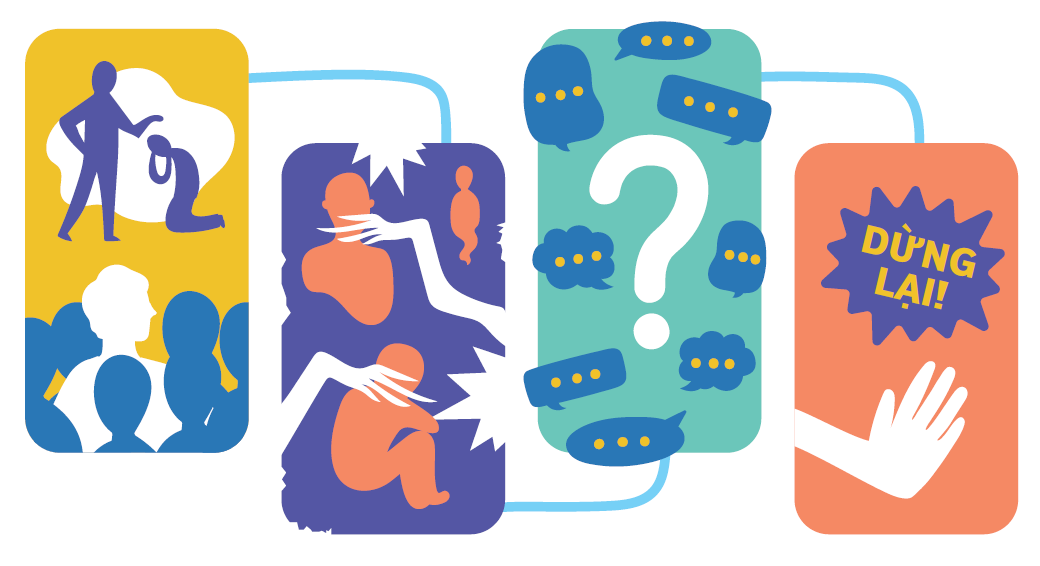
What is Forum Theatre? Let’s find out.
We shall spend a lot of time understanding Forum Theatre. Here’s the first and simplest explanation:
- Theatre is performing stories of people whom we may not know but with whom we empathise.
- A Forum is a place for discussions and debate, for hearing opposing views.
- Forum Theatre is a theatrical debate where the audience finds solutions to problems and pressures affecting their lives through offering their own ideas in order to change a performance.
The basic Forum Theatre event works like this:
- The audience watches a short play about a difficult issue which is very real in their community (for us this will be trafficking).
- The play shows the worst that can happen – a central character who is forced to do things they do not want to do or blocked from doing what they want to do. That person ends up abused, addicted, damaged or even dead.
- The audience is then asked what went wrong, why did it end like that? And they are invited to think how those problems could be avoided.
- The audience then watches the short play again but with one difference: now they can stop the play whenever they want to and suggest alternative actions to avoid the bad ending. They do this by coming onto the stage and acting out whatever they would do in that situation – this is an “intervention”.
- There can be many interventions as the audience has more ideas for change and come and try them out.
A typical Forum play can have a structure like this:
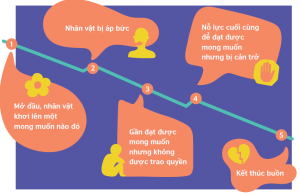
IMPORTANT - point out and explain the crossroads moments; those moments when decisions are made which could have gone in another direction and changed the outcome.
Who has the power?
In Forum Theatre the central character’s tragic story is because he or she is forced or persuaded to do things by someone with more power. Because he or she is less powerful, or thinks they are less powerful, they cannot resist the power.
Power, of course, is neutral. It can be used well or badly. We are concerned with the abuse of power. And power can be in every relationship, between siblings, teacher and pupil, father and daughter, trafficker and trafficked, rich and poor, abled and less abled etc etc. Remember the Hypnotism game you played earlier? It was about power.
Open up a discussion with members of the group - ask them to take a moment’s silence and think about where they see power or powerlessness. Some suggested questions for discussion:
- When have you experienced abuse of power?.
- Share stories with each other in 2s, then with the group
- Make a physical (snapshot) image of abuse of power
- In groups (of four or five), prepare a series of frozen images of your own experiences, each person creates one image from their memory. Concentrate on showing by the position, level, eye-line, tension etc of the bodies, where the power lies and how it is used. Playback, in silence, each group’s ‘slideshow’ of images. Discuss the commonalities, the interpretations.
- Experience the feeling of power:
- Walk around the room as if you have no power – who do you feel like?
- Walk as if you have a great deal of power – who do you feel like?
- Walk as if you are more powerful than some, less powerful than others – who do you feel like?
- Using a pack of cards each person pulls out a card and assumes the power of the number on that card (Ace is low, King is high). Walk in the space. Try to see who is more and who is less powerful than you. Place yourselves with a person you think is more powerful on your right, and someone less powerful on your left. All form a line like this, then reveal your card values to see if you were correct.
All Forum Theatre depends on power. Trafficking also depends on Power and Powerlessness. Think who might have those roles in a trafficking scenario.
What is trafficking, modern slavery?
(This should start with some statistics and some basic explanation of the main types and routes of trafficking.)
Now let’s see what we already know from our own lives and communities…
What do you know about trafficking directly or from people close to you / in your community?
You might find these questions useful:
- Do you know of any instances of trafficking in your community or friends?
- Are you aware of the relative numbers of males and females who are trafficked in Vietnam?
- Where do you think most people are trafficked to?
- What do you think is the main cause of trafficking? Why does it happen?
- What do you think happens to most people who are trafficked?
- What legal measures are there to prevent trafficking?
- If you heard of someone in the process of being trafficked, would you know what to do?
- How can trafficking be reduced or stopped?
Share your knowledge, compare your experiences. Discuss what you have heard and what kind of knowledge you have.
Make notes during this and start to 'cluster' these narratives.